
Disclosure: OutageReady is reader-supported. We have applied to RoamEnergy’s affiliate program. If we are approved, we may earn a commission when you buy through our links, at no extra cost to you. This page links to RoamEnergy’s own store and to the same products on Amazon. Right now these are plain links. Once those programs approve us, we may earn a commission from RoamEnergy and, as an Amazon Associate, earn from qualifying purchases, at no extra cost to you. We have not tested the PowerBridge ourselves; specs, prices and compatibility notes come from RoamEnergy’s own product pages and FAQ. See our affiliate disclosure.
How EV-to-home power works
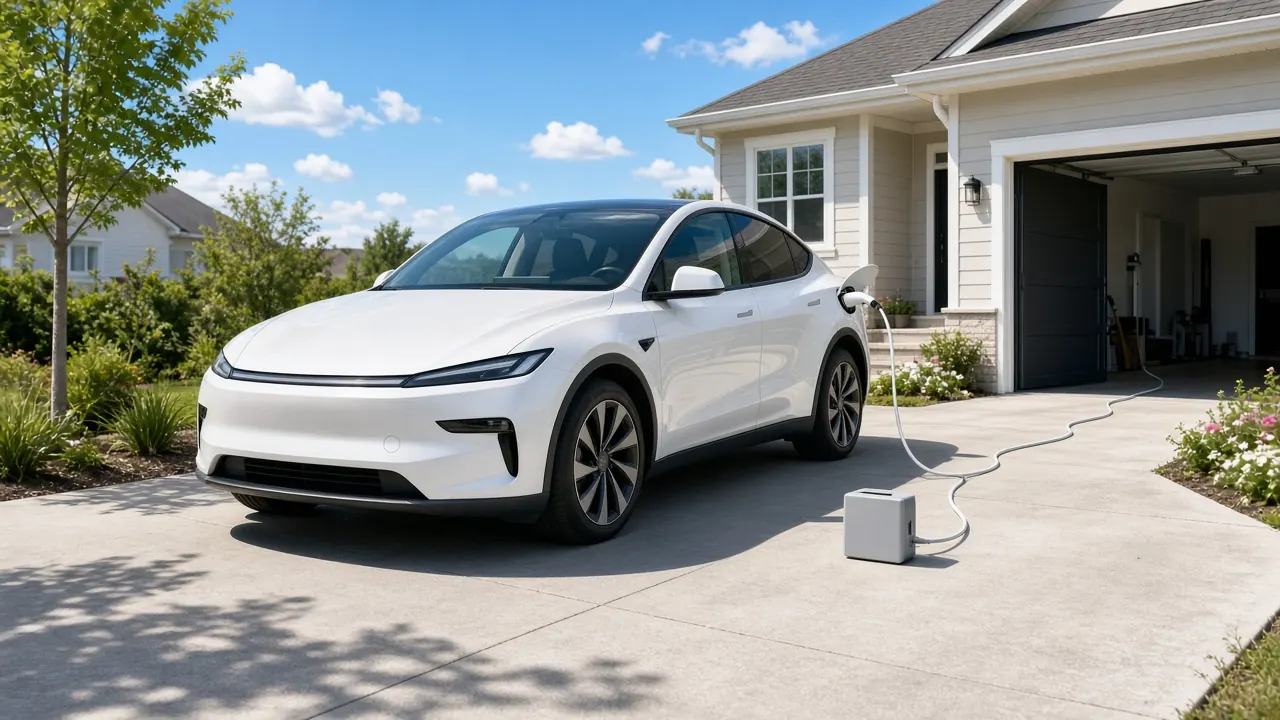
Many EVs don’t have household outlets built in. An EV-to-home adapter (often called V2L, for vehicle-to-load) fills that gap. RoamEnergy’s PowerBridge plugs into the car’s charging port. RoamEnergy says it connects through the car’s CCS charging pathway, draws on the energy stored in the EV’s battery, and turns it into ordinary AC power with outlets you can plug into.
- There’s no battery inside the PowerBridge. The car’s battery is the energy store, and the PowerBridge is the inverter.
- No fuel, no fumes, no engine noise. RoamEnergy also says no permanent change to the vehicle is required.
- You choose how much range to keep. The Pro’s app lets you set battery protection, so you can stop before your driving range drops too low.
Who it fits
- Tesla owners whose cars have CCS capability enabled: either model can work. The Standard is the lower-cost 120 V option.
- Owners of other CCS EVs: only the Pro, and only if your car is on RoamEnergy’s tested list (see compatibility).
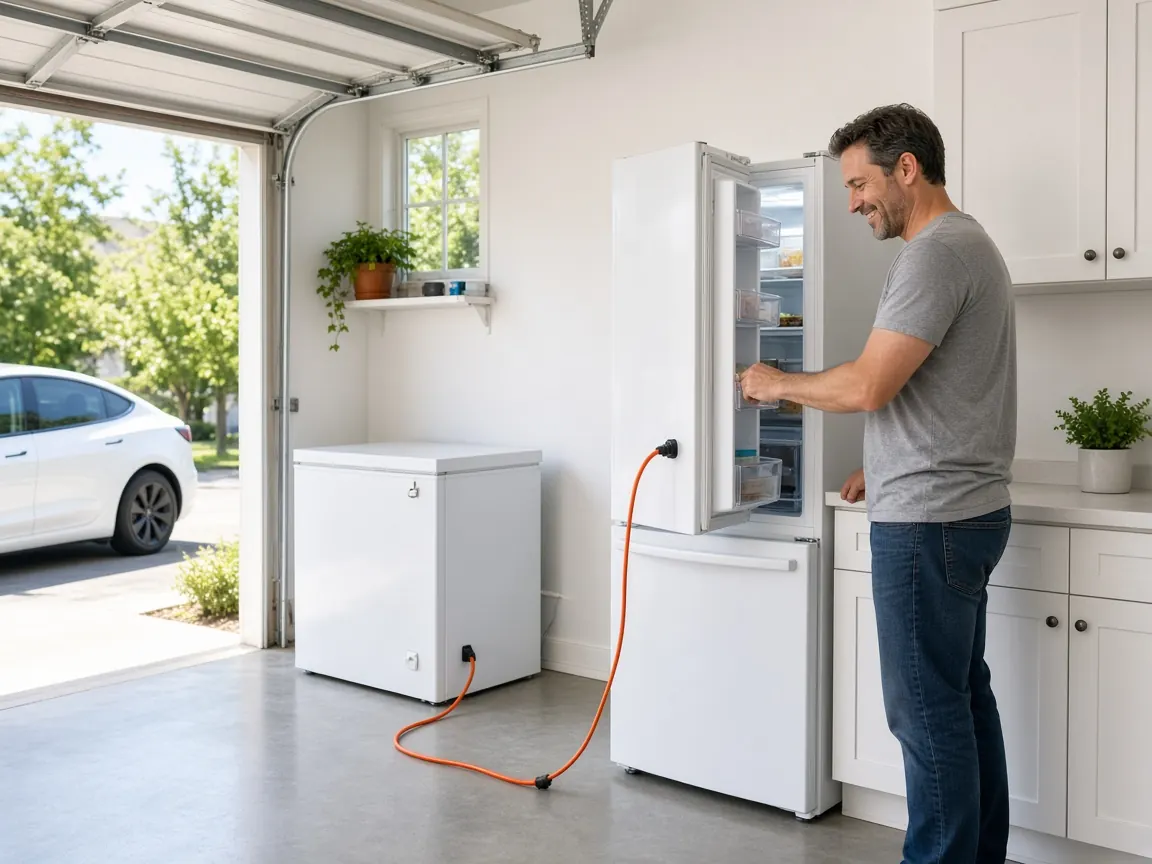
- Families who want to keep the essentials going: the fridge and freezer, lights, Wi-Fi, phones and laptops, and some medical devices, within the power limits below.
- Not a fit if you don’t own a compatible EV, if the car may need to leave during the outage, or if you want whole-home backup. RoamEnergy itself says the PowerBridge Pro is not a whole-home system or a replacement for a permanently installed generator.
PowerBridge Pro vs PowerBridge Standard
From RoamEnergy’s US store and FAQ on Nov 25, 2026. “List” is the store’s crossed-out regular price. Amazon prices can differ and change often, so check the listing.
| Model | Price | Works with | Output | Extras |
|---|---|---|---|---|
| PowerBridge Pro (Gen 2) Buy from RoamBuy on Amazon |
$1,899 (list $2,899) | Compatible Teslas and selected non-Tesla CCS EVs on RoamEnergy’s tested list | Up to 3,500 W at 120 V; up to 7,500 W / 32 A at 240 V single-phase (rear high-power output) | App monitoring and battery-protection settings. Rear extension cable $79; 2-year extended warranty $129 |
| PowerBridge Standard (Gen 1) Buy from RoamBuy on Amazon |
$1,199 (list $1,899) | Tesla Model 3, Y, S and X with CCS capability enabled (Tesla only) | 120 V pure sine wave, up to 3,500 W total; each front outlet up to 1,800 W / 15 A | Built-in display for voltage, current and power. 2-year extended warranty $99 |
Which one? If you drive a Tesla with CCS enabled and only need 120 V for a fridge, lights and electronics, the Standard costs $700 less. Choose the Pro if you drive a tested non-Tesla EV, want 240 V output for compatible 240 V equipment, or want more total power (up to 7,500 W).
PowerBridge Pro (Gen 2): Buy from RoamBuy on Amazon
PowerBridge Standard (Gen 1): Buy from RoamBuy on Amazon
Check compatibility first
RoamEnergy is clear that a matching plug isn’t enough. Compatibility depends on how the car communicates over its charging port, and on RoamEnergy’s real-vehicle testing.
- Tesla: if your Tesla’s screen shows “CCS incompatible,” the Standard won’t work unless CCS capability is enabled through Tesla service or retrofit support.
- Non-Tesla EVs (Pro only): use RoamEnergy’s tested EV compatibility list as the main reference. As of Nov 25, 2026, its FAQ lists these as confirmed not compatible with the Pro: Genesis GV60, GMC Hummer EV, Lucid Air, Kia EV6, Hyundai Ioniq 5 and Hyundai Ioniq 6.
- Not on the list? RoamEnergy asks you to contact them before ordering with your car’s brand, model, year and charging-port setup. See the RoamEnergy FAQ.
How long will it last?
Runtime depends on your EV’s battery size, how much of it you’re willing to use, what you plug in, the temperature, and conversion losses. A simple way to estimate: energy you set aside (kWh) × 1,000 ÷ the watts you’re running = hours, then knock some off for losses.
Example (just math, not a test): if you set aside 20 kWh of your battery and your fridge, lights and Wi-Fi average 500 W, that’s about 40 hours before losses. Fridges cycle on and off, so check the labels on your own appliances for their real draw. Motors such as fridges, freezers and pumps need extra watts for a moment when they start.
Safety
- Never backfeed your home’s electrical panel through a dryer or wall outlet. Connecting to a panel, generator inlet or transfer switch needs a proper transfer switch or interlock installed by a licensed electrician. RoamEnergy’s pages say the same.
- The Pro’s 240 V is single-phase, not U.S. split-phase. RoamEnergy says it doesn’t directly provide the standard 120/240 V split-phase power with neutral that a U.S. home panel uses. Some home setups may need an external split-phase autotransformer, and a licensed electrician must evaluate it.
- Check vehicle compatibility on RoamEnergy’s site before you buy (see above).
- Follow the car-side rules. RoamEnergy says to operate the Standard with the car in Park and keep the load within its rating. Leave some headroom for long runs instead of running at full load.
- Use heavy-duty extension cords rated for the load, and keep them dry and out of walkways.
- If you also own a gas generator, run it outdoors, far from doors and windows, and keep a working carbon monoxide alarm in the house.
EV adapter vs portable power station vs generator
| Option | Best for | Trade-offs |
|---|---|---|
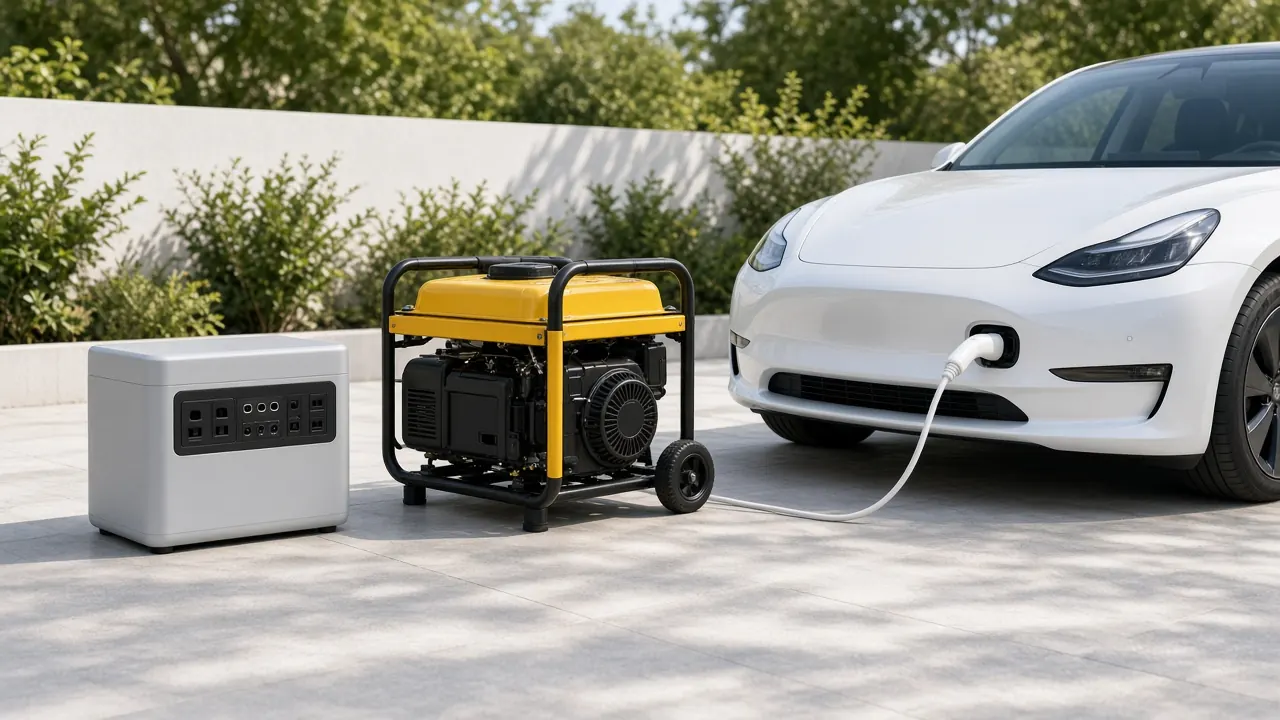
| EV + PowerBridge | Households that already own a compatible EV. An EV battery is usually many times larger than a portable station, and there’s no fuel or engine noise. | $1,199–$1,899 on top of the car. Uses your driving range. Only works with tested vehicles. Not whole-home backup. |
| Portable power station | Anyone, with or without an EV. Plug and play indoors, quiet, and rechargeable from the wall or solar. See our winter backup power picks. | Holds much less energy, so a long outage needs solar or careful rationing. |
| Gas generator | Long outages and big loads, as long as you can store and buy fuel. | Outdoors only, because of carbon monoxide. Noisy, needs fuel and maintenance. A transfer switch needs an electrician. |
Many families end up with two layers: a small power station indoors for lights, phones, Wi-Fi and a CPAP, plus a bigger source (an EV adapter or a generator) for the fridge and freezer. For the rest of the plan, see How to prepare your family for a week-long power outage and our power station buying guide.